Outside, it was still pretty cold. Nights were below zero, but daytime temperatures had climbed just above freezing, so the deep snow was slowly melting. Even though it was December, I had a feeling the temperatures would keep rising. It was Sunday, and I felt like going out alone into the woods. I wanted to clear my head and enjoy the winter landscape while there was still actual snow and not just slush and mud.
As I walked uphill, I passed bushes and small trees bent under the heavy snow. When I shook the branches, they popped back up. It made me think about how something as tiny as a snowflake—something that melts immediately—can still push down strong branches. It reminded me how small things in life can weigh us down too, until something gives us a shake and we get back up.
I only saw one doe, and it bolted as soon as I walked through an area full of fallen trees. There was no way to move quietly there, so it heard me from far away. I was a bit disappointed because I was hoping to see more wildlife. By then, I was close to the spot at the top where I planned to build a fire and warm up.
I figured building the fire wouldn’t be a big deal, even with all the snow. I had more than half a box of matches and knew I could find dry branches hanging from the trees. And there were plenty of them. I made a small hole in the snow, laid a few small logs on the ground as a dry base, and gathered a handful of twigs to use as kindling. I tried lighting them. Some twigs caught for a moment, but the fire went out. I tried a couple more times—same result. The twigs just weren’t as dry as I thought. Clearly, this wasn’t going to work, so I flattened everything and went looking for something else to use as a starter.
Next, I tried bark. I found thin, peeling strips on some branches that looked perfect—almost like paper. I collected a handful, piled it on the base, lit a match, and tried again. It burned while the match was burning, but once the match went out, the bark died too. Even blowing on it didn’t help.
At this point, I realized this wasn’t going to be simple, but I still believed I could do it. I just needed something better. So I made wood shavings from the driest branches I could find. I flattened my previous attempt, made a small pile of shavings, and lit another match. Same story again: it burned briefly, then went out. I kept blowing on it, adding the tiniest sticks, even lighting more matches. But the wood was just too cold and too damp. The temperature was around zero, the air was very humid, and nothing was truly dry. If it had been colder, the humidity would’ve turned to frost instead of soaking into the wood, and I would’ve had a much easier time lighting it.
That’s when the thought crept in that I could fail after all. My hands were cold, my boots were wet, and I really wanted that fire. But honestly, the worst part would’ve been the hit to my ego.
I checked the matchbox. Four matches left. This was it. I had to get it right now.
I flattened the leftovers from the previous attempts again. Then I carefully built a new pile with the thinnest twigs I had, leaving a small opening so I could slide the match underneath. I lit the match, held it under the pile, and hoped for the best. At first, it looked like the same pattern—small flames that couldn’t grow. But then I noticed something different: when the flames died, some embers stayed alive. When I blew on them, they got brighter and spread. More embers appeared than disappeared.
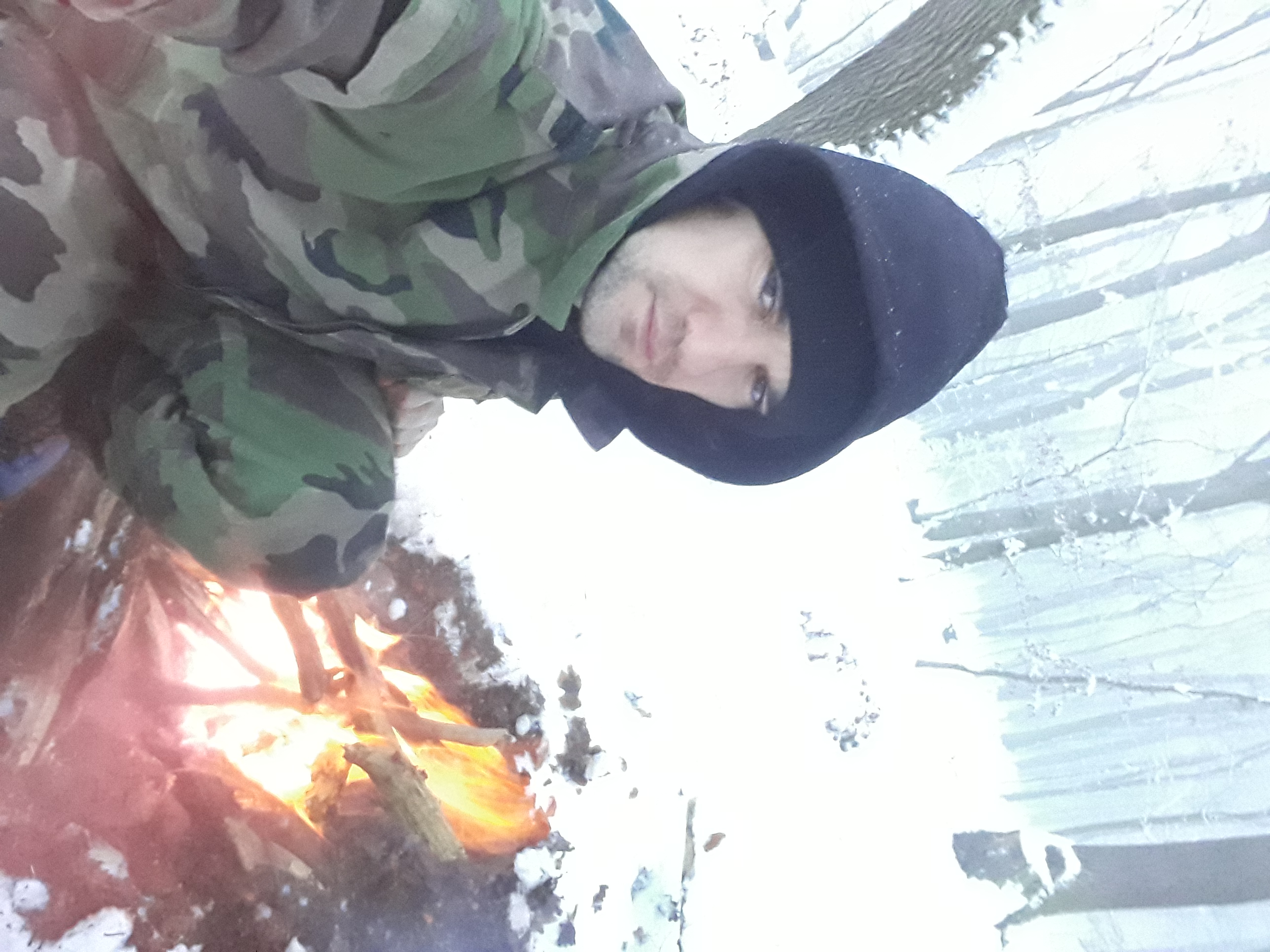
So I kept blowing. My breath pushed the heat downward instead of letting it escape upward. Suddenly, all those earlier failed attempts—the twigs, the bark, the shavings—were helping. They turned into fuel for the growing bed of embers. After a while, the pile of embers got hot enough to dry the surrounding wood, and real flames finally appeared. Once the fire stood on its own, I fed it more sticks, and within a minute I had a solid fire going.
It wasn’t planned at all, but I realized something: without all those failed attempts, I wouldn’t have had enough material to build that bed of embers. I literally burned my failures to get success. Without them, the fire wouldn’t have started.
I know it sounds like one of those stories with moral lessons, but this really hit me because it happened to me directly. Sometimes failure isn’t the opposite of success — it’s the fuel.
Later, I built the fire bigger, warmed up properly, and even took a selfie—something I almost never do—just to remember the whole experience.